Biomimcry: When cell structures inform design for 3D-printed furniture
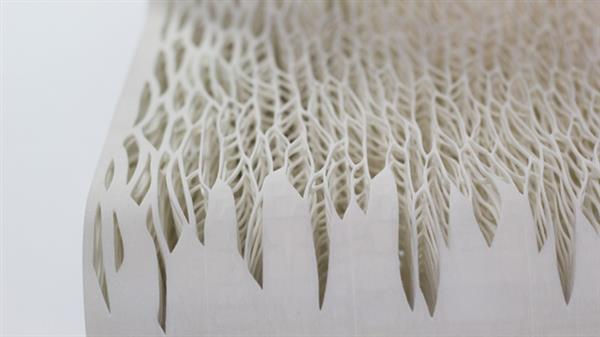
A design student, Lilian van Daal, created this 3D-printed chair which borrows design from cellular structures. Adapting cellular structure into a piece of furniture to meets human needs is the result of a design practice called bio-mimicry. The purpose of this project was to challenge current manufacturing choices behind an everyday object, like a chair, that accounts for a huge amount of logistical and materials resources- a chair

While bio-mimicry thought has been around for some time, the ability to adequately articulate complex form and function is growing. Advances in additive manufacturing, materials sciences, and accessible open-source software is allowing hobbyists to experiment with increasingly complex design. Sophisticated 3D printing tools and materials are increasingly more accessible on the consumer market. This offers opportunity for spontaneous, novel invention in a new creative community. Rising amateur participation from a variety of backgrounds create ripe conditions for serendipitous intellectual collision- often a hallmark of historical scientific breakthroughs.
Sustainability
This project is a great showcase for more efficient and sustainable manufacturing. The thinking on display here favors simplicity- cutting out the need for many different materials and over-complicated fabrication. Non-recyclable materials like glue are cut out of the of the product entirely. In this sense, the product embodies an environmental message; use the underlying framework of nature to create a product which serves to save it.

Open-source community
Open-source development communities exist to serve one purpose: to improve upon and make more accessible the technology being developed or a collection of technological components. The 'maker' community is one such example. This is how individuals- with just ideas, software and a printer- can contribute to sustainable design and introduce new thoughts to the world around them. These design files could be distributed to anyone with the means to print this chair. The files could also be refined or improved upon by other designers or engineers.
This is a way to shift manufacturing and production power to local communities- which creates more cohesion and self-sufficiency. A de-centralized system of laboratory and fabrication facilities (labfabs) would also open up new opportunities for job creation. If those jobs are filled by residents of the community, those new workers would be see the fruits of their labor and I believe that fosters a strong sense of community and satisfaction.
Comments